
What StarCraft can teach us about business...
and the global economy, if you're into that sort of thing.

I used to love playing StarCraft.
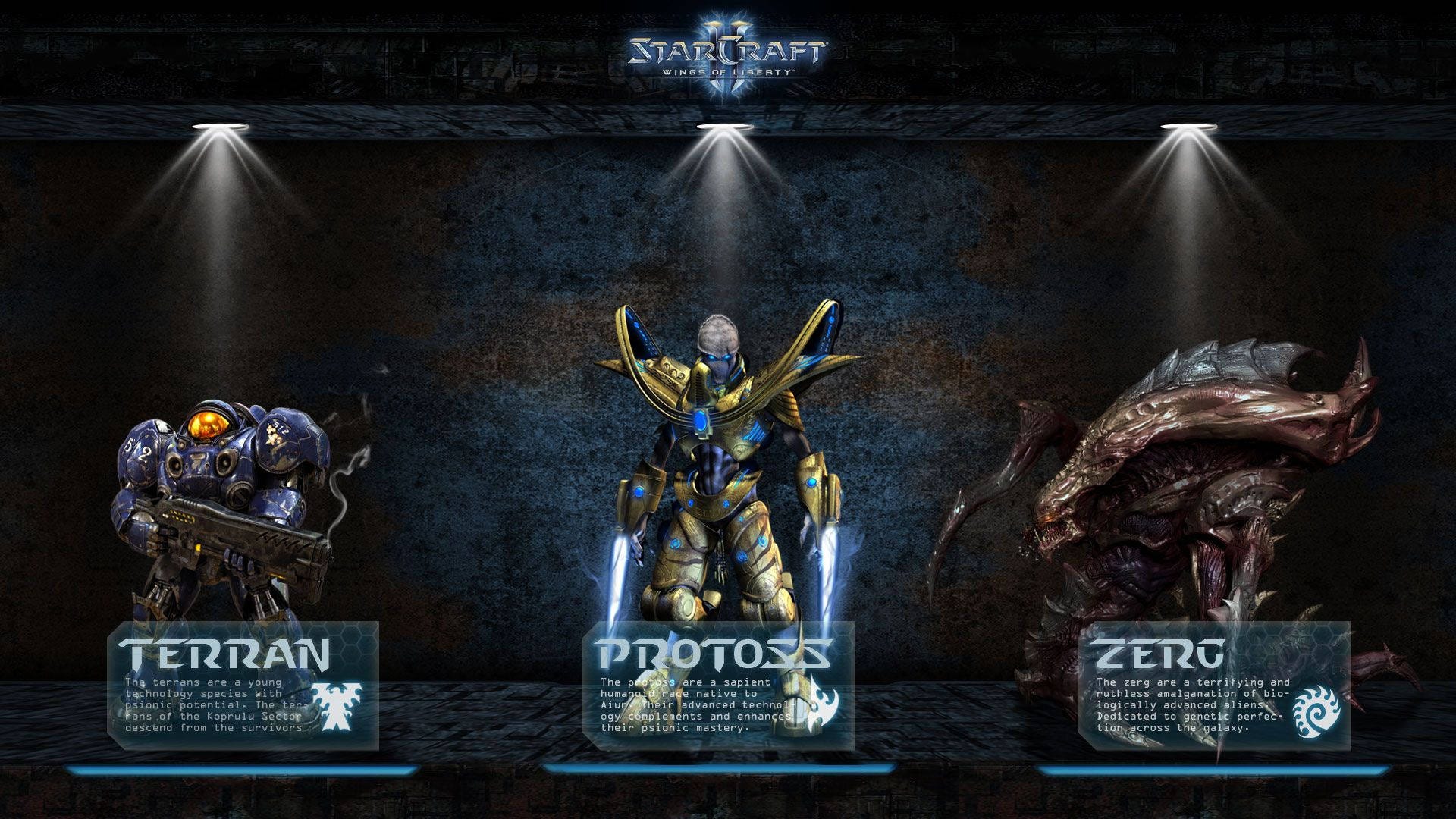
For the uninitiated, it's a real-time strategy game released in 1998, where you harvest minerals, control armies, and battle across a sci-fi universe with three distinct races:
humans (Terrans), insect-like aliens (Zerg), and advanced aliens (Protoss).
If you ask anyone who has played the game, they'll share my enthusiasm, no matter how nerdy it sounds.
Hell, they may even recall their shock when Sarah Kerrigan — a human Ghost operative betrayed by her own commander — is left to the Zerg, captured, and transformed into the Queen of Blades, the fearsome leader of the Zerg army.
(Yes, I understand how lame that sounds, but iykyk)
I won't go into more detail, but the world design was so well crafted, it's no surprise it is one of the most successful games of all time. It was easy to look up at the clock after hours of playing to realize it was almost 4am and you should've gone to bed ages ago.
One of the reasons I stopped playing the game is it was easy to play for TOO long, at the expense of other things that were more productive.
Time just disappeared…
Of course while the single player mode was great, the online community and competitive play is what has sustained its popularity 20+ years later. And needless to say, when people have been playing a single video game for 16+ years, the people who play this game can be VERY good…
Like, scary good…
Like, make-me-never-want-to-play-again-because-they're-so-much-better-than-me good…
So instead of playing, I would watch the world’s best players on Youtube.
And after watching hundreds of matches, it’s obvious the game really comes down to two things:
having the best strategy (the right plan of attack)
executing that plan as fast as possible.
And that's where APM comes in…
What is APM, and why does it matter?
In the gaming world, there's a concept called APM, aka Actions Per Minute.
It's a measure of how many commands a player inputs in one minute: moving units, building structures, issuing attack orders, managing the economy, etc.
Put simply, APM is just how fast you can turn strategy into action.
Professional players can reach insanely high APM counts, often averaging 250–400+ APM.
Casual players (like me) might sit anywhere from 50–150 APM.
Assuming every player's strategy is equally sound, the player with the higher APM is far likelier to win.
After all, how do you beat someone who's executing 4x faster than you?²
I've written before about what I learned from people like Naval Ravikant, who said to work like a lion, not a cow. Lions spend most of their time resting and observing, but when they spot the right opportunity, they strike.
You don't need to be constantly busy; you can be patient, selective, and then execute decisively when it matters.
Unfortunately, I think a lot of people interpret this to mean 'I shouldn't have to work that hard,' when the reality is, spotting the right opportunity is only half the battle…
You still need to execute faster than the competition.
'APM' in the real world…
There's been a lot of talk lately about Canada's inability to get big things done, and (in some circles) a contrasting appreciation for China's ability to execute at speed.
Chris recently recommended a great book to me specifically about this called Breakneck by Dan Wang.
Wang describes China as an "engineering state" in contrast with America's "lawyerly society" that “brings a gavel to block almost everything, good and bad.”
Canada shares much of this lawyerly approach, and I had it anecdotally confirmed just a few days ago when a friend told me his large Canadian software firm employs more lawyers than developers.
With that in mind, the outcomes become obvious…
To use trains as an example, while China has built high-speed rail networks spanning thousands of kilometers, Canada has been talking for decades about building a single high-speed rail from Quebec to Toronto, and the odds are, we won’t see it any time soon.
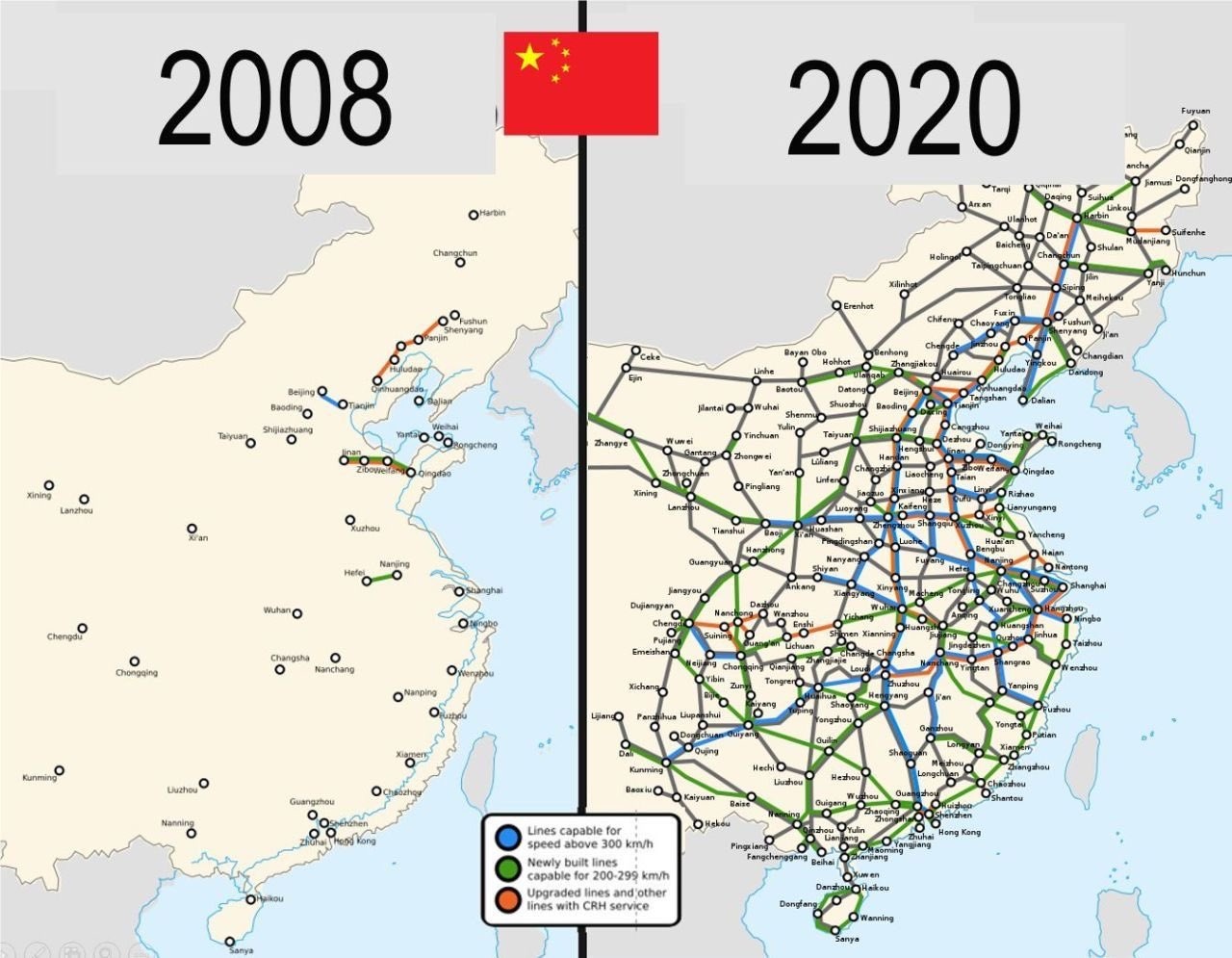
China's ability to, in StarCraft terms, achieve a high APM has allowed them to build things we Canadians have only been able to talk or dream about.
I'm no geopolitical expert, and, (despite studying Mandarin and having it be my #1 bucket list travel destination) I've never been to China, so I'm not actually here to debate the pros and cons of either…
I'm just saying…
I think it's obvious if Canada and China were both playing Starcraft, we'd be playing in the bottom feeder league while China would be e-sports giants.
The business APM problem
Why I bring it up at all is because this same execution gap shows up in almost every business I’ve ever worked with. If we're being honest, the average company's execution speed probably wouldn't make them elite StarCraft players either.
And like it or not, high 'APM' is often what separates the top performing businesses from everyone else.
A client of mine who works in a senior marketing role often complains to me she no longer does any ACTUAL marketing…just has meetings about meetings, which inevitably end up resulting in MORE meetings.
I even once had a client pay for services in Q2 of one year, only to not implement the solution until Q2 the following year. Every procurement department's worst nightmare…pay in advance and then stall out on execution.
This is everywhere…
"Let's circle back on that" becomes the default response to any action item, scheduling follow-up meetings to discuss what was already discussed…
It’s relentless.
To be clear, I'm not discounting the strategy phase (it's my favourite part), but if we had this mentality 100 years ago, we probably wouldn't have made automobiles, early vaccines, or the Wright brothers' 12-second flight that barely got off the ground.
All of these were imperfect first attempts that got better through doing, not endless planning.
Why this matters more than ever
While it comes with its own set of challenges, ‘speed-to-action’ is one of the reasons I enjoy working with businesses in the sub-$20M revenue threshold.
Less buy-in is required, meaning more things can get approved, meaning more results can accumulate faster. They may be frantic, disorganized, and chaotic, but be damned if their APM aren’t extremely high!
Because when you strip away the bureaucracy and buy-in it takes to execute a single strategy, you'd be amazed what you can get done in a month.
And as we enter the AI era, I think everyone needs to be thinking more and more about APM.
I've never been more bullish on the ability for a small group of people to make a massive amount of change. I often think about a phrase I heard growing up: "I'm just one person, what can I do?"
Well, turns out in the post-internet and early AI days, you can do a hell of a lot.
Whether this excites you or causes anxiety depends on your outlook, but is also beside the point, because it's becoming clearer every day if we don't increase our individual APM,
it's more likely we face a layoff.
it's more likely we get swallowed up by the competition.
it's more likely we watch opportunities slip away while we're still planning.
None of which are good things.
How to increase your APM
In my experience working with dozens of companies, the strategy is usually already at least mostly green-lit; it's the execution that's missing.
So naturally, we have to ask how we fix it…
And like any issue, the first step is recognizing we have an APM problem to begin with.
Sure, nobody wants to admit they're the bottleneck, but if we're being honest, we've all done it, whether intentionally or not.
And yes, there are tactics that can help…
improving meeting structure (including what shouldn’t be a meeting),
calculating ‘failure debt’,
embracing "good enough" over perfect,
’shadow building,’
firm decision deadlines,
48-hour war rooms,
creating single decision owners,
defaulting to action when facing uncertainty,
or running ‘execution autopsies’ on what didn't ship.
Every company has their own unique issues, so solutions could be a whole other series of blog posts, but at its core, slow action is a cultural issue.
If the culture prioritizes high-APM, regardless of the means, they’ll be much more likely to achieve it.
Increasing “APM” doesn't require a complete overhaul…
Being 10% more decisive and taking 10% more bias toward action can compound into massive results.
I don't like Elon Musk, but I don't think it's offensive to ask "what did you get done this week?"
The fact that it caused outrage could be a symptom of how comfortable we've gotten with NOT getting things done.
(Or maybe the outrage was him waving the chainsaw on stage, who can say?)
We're not going to be at peak performance all the time..hell, this morning despite three coffees, I’m feeling drained today and didn't get everything I wanted done.
Now it's almost 5pm on a Friday, and I have to admit to myself, I'm probably going to kick the can down the road on a few things.
It happens… C'est la vie…
I'm not beating myself up about it, but I'm also not pretending I'm ‘David Goggins peak performance’ right now.
Because if we want to win at Starcraft, (and life) we can't normalize this.
We can't make slow execution the default.
Which brings me back to the main point…
Strategy without execution speed leaves you watching someone else build their empire while you're still planning yours.
I learned this the hard way playing Starcraft online two decades ago, but it applies just as much to business as it does building trains.
So let's get moving.